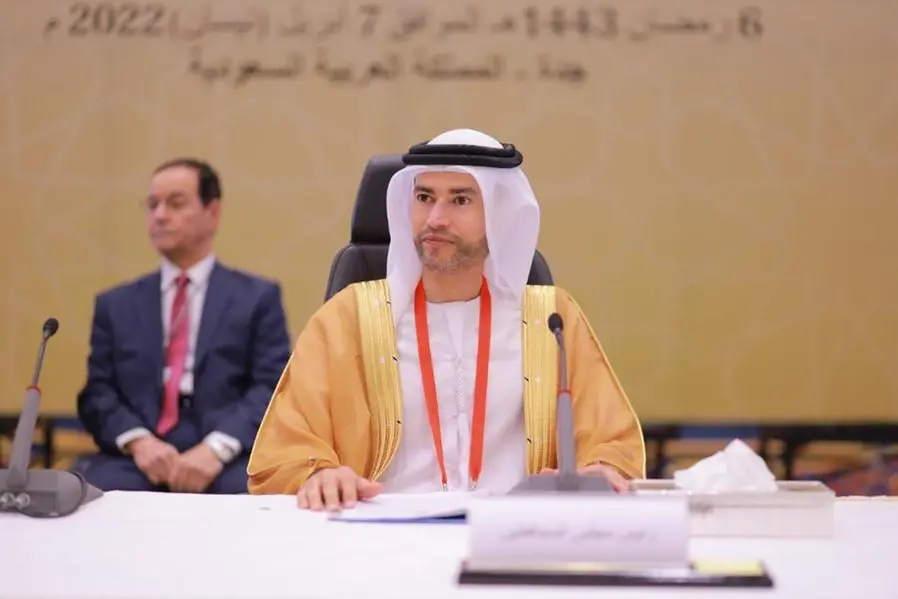
H.E. Mohamed bin Hadi Al Hussaini financial leadership
Financial Leadership & Vision

Engineering the UAE's
Financial Future

A comprehensive strategy for fiscal sustainability, economic diversification, and institutional governance that positions the UAE as a global financial leader.

A Vision for Fiscal Sustainability

Under the leadership of H.E. Mohamed bin Hadi Al Hussaini, the UAE's financial strategy has evolved into a comprehensive framework that addresses both immediate fiscal needs and long-term economic resilience. The strategy is built on the understanding that a nation's financial health is not measured solely by GDP growth, but by the sustainability and inclusivity of its economic systems.

The financial vision encompasses three interconnected dimensions: maintaining fiscal discipline to ensure government effectiveness, pursuing strategic diversification to reduce dependency on any single revenue source, and strengthening governance frameworks to build institutional trust and market confidence.

This multidimensional approach reflects a deep understanding of global economic trends and the unique opportunities available to the UAE as it continues its transformation into a knowledge-based, innovation-driven economy.

UAE Financial Strategy: Key Metrics

Fiscal Diversification87%
Non-Oil Revenue Growth92%
Government Efficiency Index78%
Financial Sector Strength95%
Global Competitiveness83%

Three Pillars of Financial Excellence

The strategic framework guiding the UAE's financial policy operates on three foundational pillars, each reinforcing the others to create a resilient and adaptive economic system.

01

Stability

Maintaining macroeconomic stability through prudent fiscal management, sovereign wealth preservation, and counter-cyclical economic policies that insulate the UAE from global economic volatility.

  • Sovereign wealth fund optimization
  • Fiscal reserve management
  • Monetary policy coordination
02

Growth

Driving sustainable economic growth through strategic diversification into high-value sectors including technology, renewable energy, financial services, and knowledge-based industries.

  • Non-oil sector expansion
  • Innovation ecosystem development
  • SME and entrepreneurship support
03

Global Integration

Positioning the UAE as an indispensable node in the global financial network through international partnerships, trade agreements, and leadership in multilateral financial institutions.

  • Bilateral financial agreements
  • International standards adoption
  • Cross-border investment frameworks

Budget Planning & Execution

Comprehensive fiscal planning frameworks that align government spending with national strategic priorities while maintaining fiscal discipline.

Revenue Diversification

Strategic initiatives to broaden the revenue base through value-added tax, corporate taxation, and non-oil revenue enhancement programs.

Financial Technology Integration

Embracing digital transformation in financial services, from regulatory technology to digital payment infrastructure and digital currency research.

Risk Management Architecture

Developing robust frameworks for identifying, assessing, and mitigating financial risks across the national economic system.

Strengthening the Institutional Framework

The UAE's financial ecosystem is a sophisticated network of institutions, regulatory bodies, and market mechanisms that work in concert to facilitate economic activity and attract global capital. Under Al Hussaini's stewardship, this ecosystem has been systematically strengthened to meet international standards while preserving the agility that defines the UAE's competitive advantage.

Key initiatives include the modernization of the Federal Tax Authority's operations, the enhancement of financial reporting standards across government entities, and the development of frameworks for emerging financial technologies including digital currencies and blockchain-based financial infrastructure.

These efforts reflect a pragmatic approach to financial governance — one that embraces innovation while maintaining the regulatory rigor necessary to protect market integrity and investor confidence.

The Economics of Resilience

Real-world financial case references that demonstrate the strategic thinking behind the UAE's fiscal policy decisions.

Case Reference

Sovereign Wealth as Economic Stabilizer

Drawing from the Norwegian and Singaporean models, the UAE has refined its approach to sovereign wealth management. The strategy emphasizes long-term value creation over short-term returns, with strategic allocations to sectors that align with the nation's post-oil economic vision — technology, renewable energy, healthcare, and advanced manufacturing.

This approach has proven effective in buffering the national economy against commodity price volatility while generating returns that fund intergenerational prosperity.

Case Reference

Tax Modernization as Growth Catalyst

The introduction and optimization of the UAE's corporate tax and VAT frameworks represent a landmark evolution in the nation's fiscal architecture. Rather than viewing taxation as a constraint on growth, the approach frames it as a tool for creating a more sustainable and equitable economic system — one that reduces dependency on hydrocarbon revenues while maintaining the UAE's competitive position.

International observers, including the OECD and IMF, have cited the UAE's approach as a model for emerging economies seeking to modernize their fiscal systems.

"True financial leadership is not about managing what exists — it is about creating the conditions for what can be. Our fiscal policies must be bold enough to shape the future while prudent enough to protect the present."

— H.E. Mohamed bin Hadi Al Hussaini